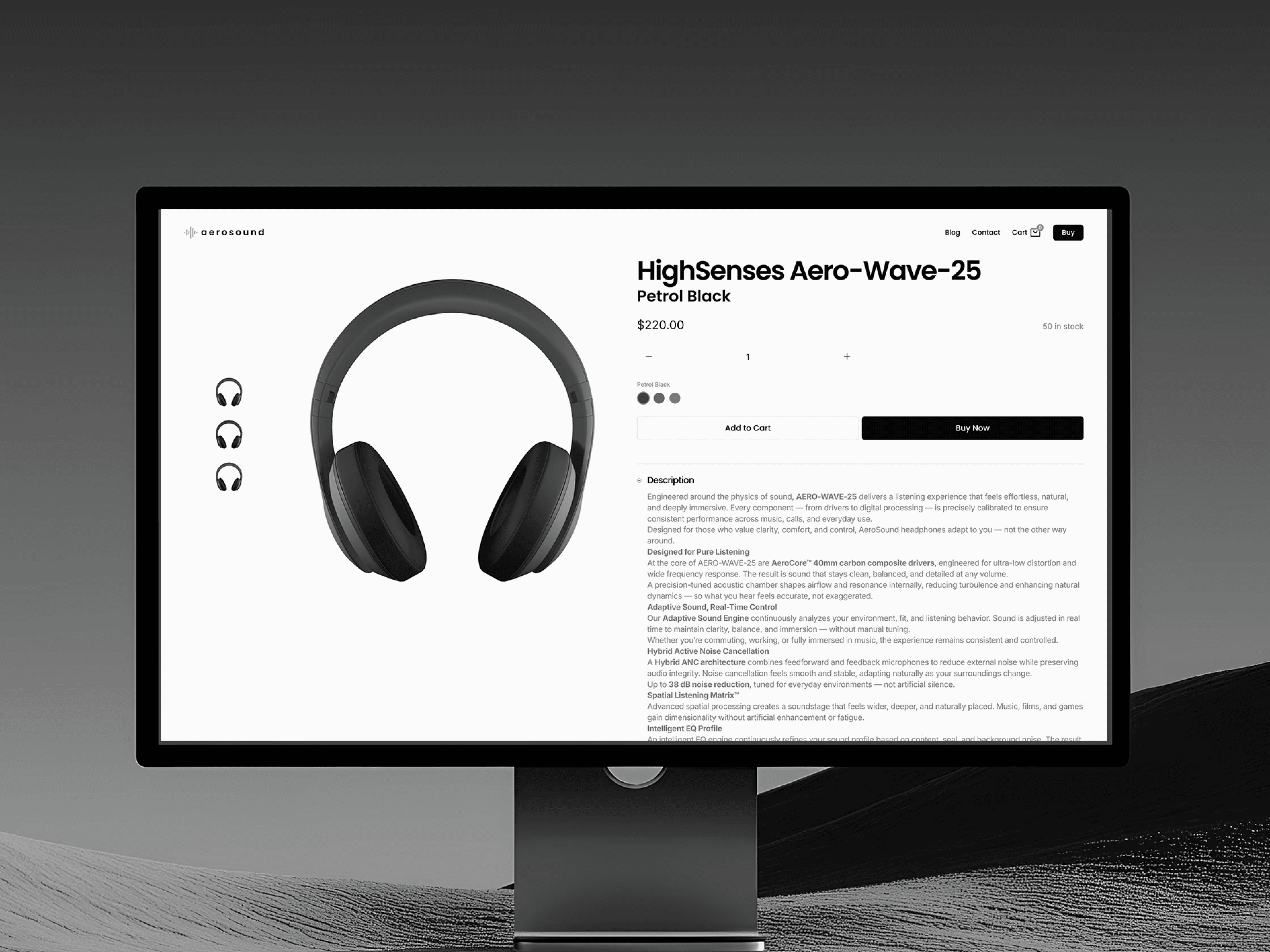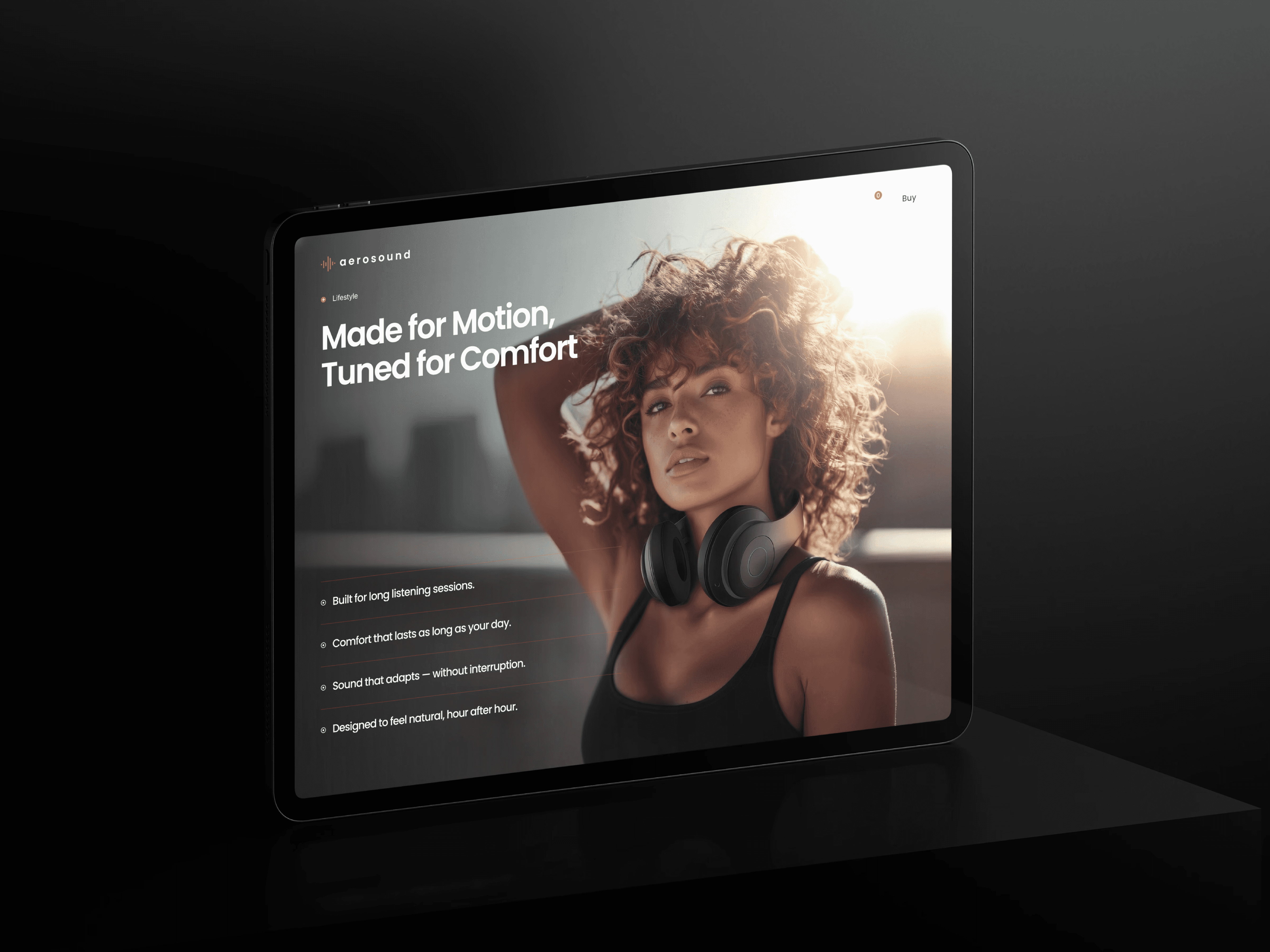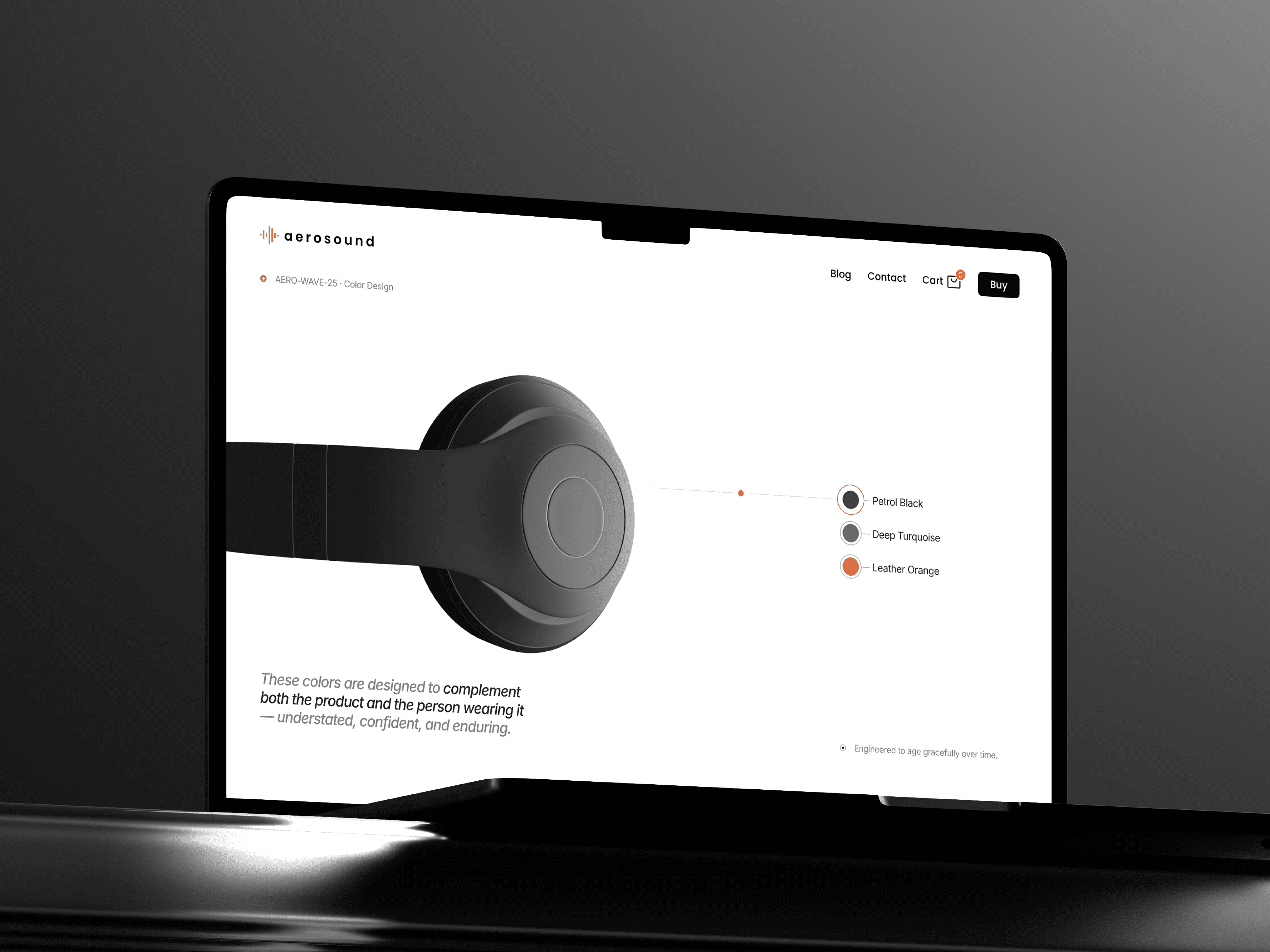
My Approach
From the beginning, this project was approached as a real commercial product, not a visual experiment. The goal was to design a flexible, production-ready website template that could serve premium consumer technology brands while remaining adaptable across product categories.
Rather than designing for a single device, the structure, interactions, and content hierarchy were built around principles of clarity, modularity, and storytelling. Every section was treated as a system — capable of standing on its own or evolving alongside different products, markets, and brand voices.
The approach combined:
Strong visual hierarchy
Modular CMS-driven content
Performance-aware interactions
A balance between editorial storytelling and e-commerce efficiency
Vision and Innovation
The vision was to create a template that feels as refined as the products it showcases.
Inspired by the design philosophies of high-end consumer technology brands, the project emphasizes:
Calm, confident layouts
Intentional use of space
Motion used as feedback, not decoration
Innovation here isn’t about novelty — it’s about restraint. Instead of overwhelming users with effects, the experience relies on subtle motion, scroll-based progression, and precise typography to guide attention.
The result is a digital experience that feels considered, premium, and timeless, rather than trend-driven.
Identifying Unique Challenges
Several key challenges defined the project early on:
Template Versatility
The design needed to work for headphones, speakers, wearables, smart devices, and even fashion-adjacent products — without feeling generic.Complex Technical Storytelling
Modern consumer tech products are deeply technical. Translating advanced features into content that feels accessible and engaging required careful copy structure and layout decisions.Balancing Interactivity and Performance
Rich visuals and animations needed to feel smooth and premium without compromising load times or usability.Seamless Shopify Integration
The template had to integrate cleanly with Shopify via Frameship while maintaining full design control.
Resolving Complex Problems
Each challenge informed specific design and technical solutions:
Modular Sections
Features like Sound Tech, Technical Specs, and Lifestyle were built as independent modules that can be reordered, removed, or repurposed.Scroll-Based Storytelling
Interactive elements such as image sequences and feature reveals are driven by scroll, creating engagement without forcing users into fixed timelines.CMS-Driven Content Architecture
Technical specifications, blog posts, and feature sections are all CMS-powered, allowing non-technical users to update content effortlessly.Performance-First Motion
Animations are lightweight, purposeful, and optimized to enhance clarity rather than distract.
User-Centric Design
At its core, the project prioritizes how users read, scroll, and decide.
Key user-centric principles include:
Clear entry points for different user intents (explore, compare, purchase)
Predictable navigation patterns
Strong typographic contrast for effortless scanning
Logical progression from inspiration → understanding → conversion
Rather than forcing users to “discover” content, the layout guides them naturally, reducing cognitive load at every step.
Meeting User Needs
The template supports multiple user journeys:
Curious Explorers
Engaged by visual storytelling, lifestyle imagery, and editorial sections.Detail-Oriented Buyers
Served through structured technical specs, sound technology breakdowns, and FAQs.Ready-to-Purchase Users
Clear CTAs, integrated cart behavior, and frictionless Shopify checkout flows.
This layered approach ensures the experience remains effective regardless of how deeply a user wants to engage.